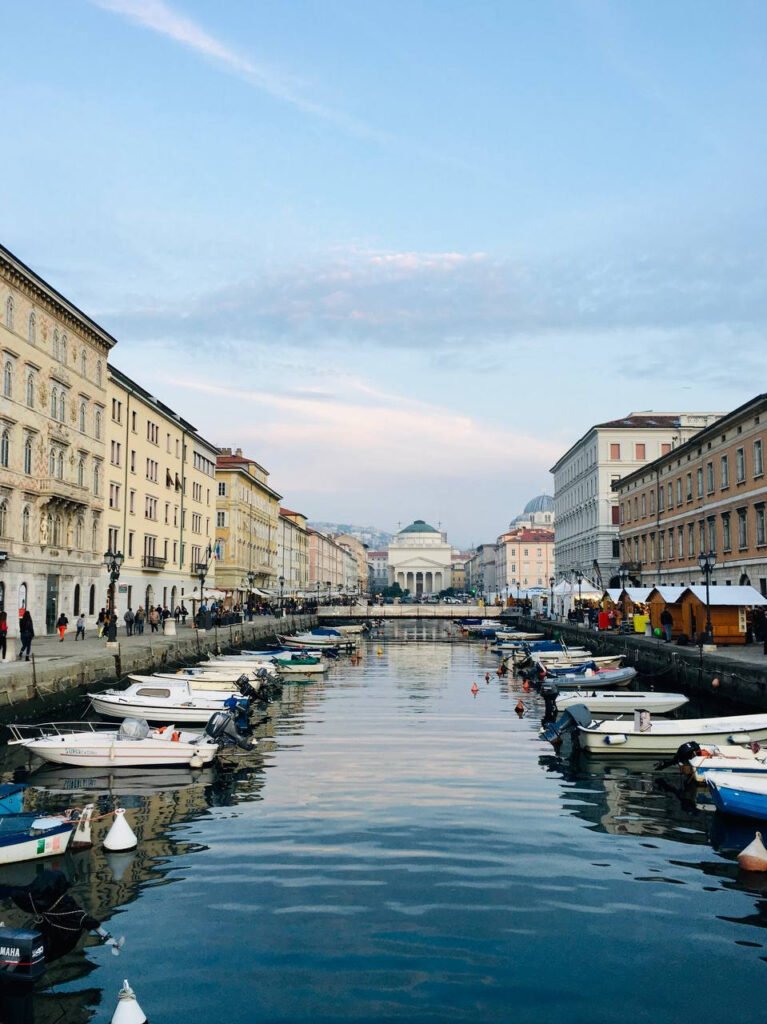
Where Central Europe Meets the Mediterranean
In the 19th century, Trieste was known as “Vienna on the Adriatic” — a city with imperial charm, but with the sea at its doorstep. As the main port of the Austro-Hungarian Empire until 1918, Trieste became a meeting point for Central European elegance and Mediterranean warmth. Today, it still retains that cosmopolitan, refined atmosphere.
Architecture and Culture That Tell a Story
- Imperial elegance: grand facades with Viennese Secession details, marble columns, and open squares,
- Coffee culture: birthplace of Illy, home to historic cafés like Caffè San Marco (1914), where James Joyce and Italo Svevo once wrote — and where students still gather today,
- Literary heritage: a place where books and conversation matter as much as the view,
- Cosmopolitan roots: Italian, Jewish, Slavic, and German influences blend into a unique urban identity.
Life by the Adriatic — Calm, Elegant, and Connected
Trieste’s sea is not just a backdrop. Each autumn, it hosts Barcolana, the world’s largest sailing regatta, filling the bay with thousands of sails. The rest of the year, the coastline offers peaceful walks, hidden coves, and breathtaking sunsets.
Quality of Life Highlights
- Ranked #1 in Italy for quality of life (Il Sole 24 Ore, 2021),
- Excellent healthcare, safety, and environmental standards,
- Elegant apartments from €100,000–120,000,
- Green spaces and the sea within walking distance,
- Perfect rail and road connections to Austria and Slovenia — ideal for digital nomads.
Is Trieste Right for Me?
This is not a typical tourist resort. Trieste is for those who want to live by the Adriatic with cultural depth, refined architecture, and a calmer pace of life. It’s a city where you can breathe, think, and feel connected to both Central Europe and Italy.
Want to learn more about Italian regions? Contact us.
© ITALTY — Your Italian Realty
We write about buying real estate in Italy with maximum benefit for you, without risks and stress.